Profilo FacebookAccount Instagram
IT | EN

Publications

A large collection of my scientific works: books, monographs and reviews.
MUMMIES
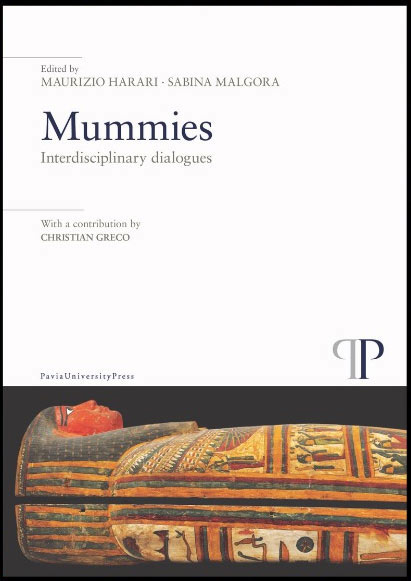
Interdisciplinary Dialogues. A cura di Maurizio Harari e Sabina Malgora


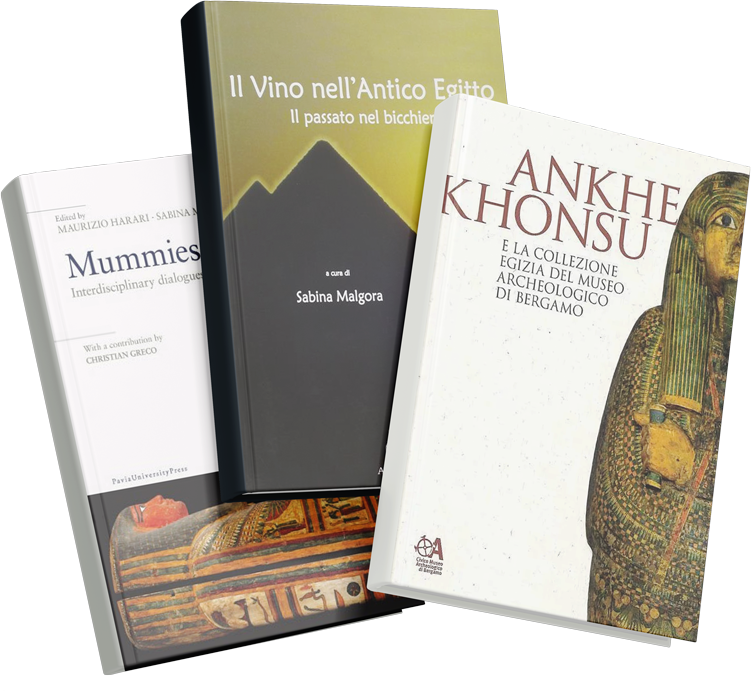
This book, along with an overview of the discovery of the tomb of Kha and Merit by Schiaparelli in 1906 – provided by the distinguished director of the Egyptian Museum in Turin, Christian Greco – gathers a series of papers that explore, in various ways, two mummies housed at the Archaeological Museum of the University of Pavia since the 19th century. Through these contributions, the reader will also gain insight into the main features of the Mummy Project’s research protocol, which serves as an exemplary model of respect for human remains, as well as for their conservation and potential exhibition. The Archaeological Museum of the University of Pavia, founded in 1820 by Pietro Vittorio Aldini (1773–1842), houses a rich collection of artifacts, including prehistoric ¬ nds, Etruscan clay votive offerings, painted ceramics from Greece, southern Italy, and Etruria, ¬ gurative bronzes, Roman sculptures, Latin inscriptions, a remarkable coin cabinet, and a gallery of plaster casts. The two Egyptian mummies in the collection were gifts from the 1820s and 1830s: the female body was donated by S. Georgiani (from Cairo), and the male head by E.W.P. Rüppell (from Frankfurt).

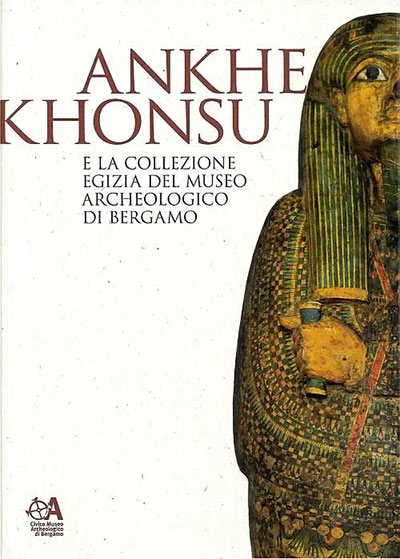
ANKHEKHONSU AND THE EGYPTIAN COLLECTION OF THE ARCHAEOLOGICAL MUSEUM OF BERGAMO
Edited by Stefania Casini, Sabina Malgora, and Ilaria Piccolini


The volume presents the Egyptian collection of the museum, enriched by a series of in-depth essays exploring the different types of artifacts. The largest section of the catalogue is devoted to the mummy of Ankhekhonsu and his sarcophagus. These two items were at the center of a research project involving all the specialists of the Mummy Project, who studied the finds using the most advanced Egyptological and forensic techniques. The aim was twofold: to restore the mummified individual’s identity and dignity while historically contextualizing the sarcophagus, and to ensure their preservation—and thus eternity—through careful restoration. All the artifacts were donated by collectors, and their provenance is unknown, except for the mummy and its sarcophagus. These originate from the Theban area, where Ankhekhonsu served as scribe of the granary of offerings in the temple of Amun (modern-day Karnak) and as a pure priest. Thanks to recent research, the figure of Ankhekhonsu has been reconstructed, including a facial reconstruction: he was between 35 and 50 years old and lived between the end of the 20th and the beginning of the 22nd Dynasty. The sarcophagus is contemporaneous, dating to the late 21st–early 22nd Dynasty. The donation of these objects by Consul Giovanni Venanzi, following his stay in Egypt, to the Mayor of his hometown, Bergamo, is of particular interest, as is a letter from the renowned archaeologist Ernesto Schiaparelli, which briefly describes the sarcophagus. A meticulous restoration of the mummy and a full examination of the sarcophagus ensure their conservation. This publication offers a fascinating journey into the world of ancient Egypt and into the field of multidisciplinary research, employing investigative techniques from medicine, chemistry, physics, and entomology, among others. Among the many contributors are Chantal Milani, Cinzia Oliva, Stefano Vanin, Marco Nicola, Luigi Bonizzi, Alessio Soggiu, Gianpaolo Carrafiello, Jonathan Elias, Suzanne Frielich, Wilfried Rosendahl, Alessandro Bulfoni, Valentino Rubetti, Luca Bernardo, and many others.

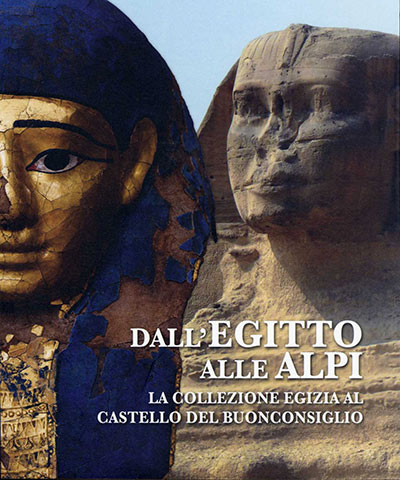
FROM EGYPT TO THE ALPS
The Egyptian Collection of the Buonconsiglio Castle


The Egyptian collection of the Buonconsiglio Castle in Trento consists of artifacts assembled by Taddeo de Tonelli, a major in the Austro-Hungarian army (Levico, 1778/79 – Vienna, June 14, 1858), who bequeathed to the city of Trento a rich legacy of objects gathered from various parts of the world. Within this encyclopedic and “curious” collection, the Egyptian section is predominant, comprising over a thousand objects.All the items originate from funerary contexts, being parts of the burial goods placed inside tombs, and they span the entire course of Pharaonic history.“The collection is like a lens through which one can explore the culture of the people who lived along the Nile Valley—a lens that allows us to see how the Egyptians imagined the world, how they conceived earthly and eternal life, how they expressed their religious sensibility, and how they overcame the fear of death by redefining its boundaries and envisioning it as an extension of the social and economic reality of the living.” The catalogue, edited by Sabina Malgora, includes not only detailed entries for each artifact but also a rich and comprehensive series of essays illustrating various aspects of ancient Egyptian culture—from architecture to religion, from funerary practices to mummification, and from its millennia-long history to the culture of collecting and the life of Taddeo de Tonelli himself. Contributors include: Franco Marzatico, Salima Ikram, Michelangelo Lupo, Alessia Amenta, David O’Connor, and Anna Pieri.

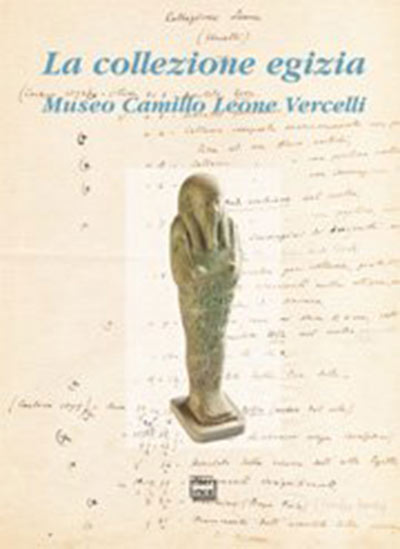
THE EGYPTIAN COLLECTION OF THE CAMILLO LEONE MUSEUM

The eclectic nature of the museum’s collections places, alongside those closely connected to the history of Vercelli—the primary interest of the notary and collector after whom the museum is named—other collections of diverse geographic origin. This aspect stems from the concept of the work of art as an instrument of knowledge and education, as well as from the influence of the cultivated Turin milieu that shared the same principles of conservation and protection of cultural heritage.Thus, the presence in Vercelli—or rather, also in Vercelli—of a small yet significant group of Egyptian artifacts finds its justification, just as in other Piedmontese museums. The Egyptian collection, seemingly distant from Camillo Leone’s main interests, actually reflects his wide-ranging curiosity and his desire to preserve and safeguard meaningful testimonies of the past, regardless of their type or period.Certainly, Egyptian civilization did not captivate the Vercelli notary as profoundly as it did his contemporary and fellow citizen, lawyer Antonio Borgogna, whose valuable collection—today the Museo Borgogna—featured the so-called “Arab Room”. There, original Orientalist works were displayed, along with two rather large mummified crocodiles, donated by Leone himself and originating from the art collection of the Ospedale Maggiore, which he had acquired in 1889.The collection, numbering a few hundred pieces, has been on display since 1939 in the octagonal hall of the building connecting the museum’s two other sites: Palazzo Alciati and Palazzo Langosco.

For purchase inquiries, please contact the museum
Tel. +39 0161 253204 | Email: info@museoleone.it

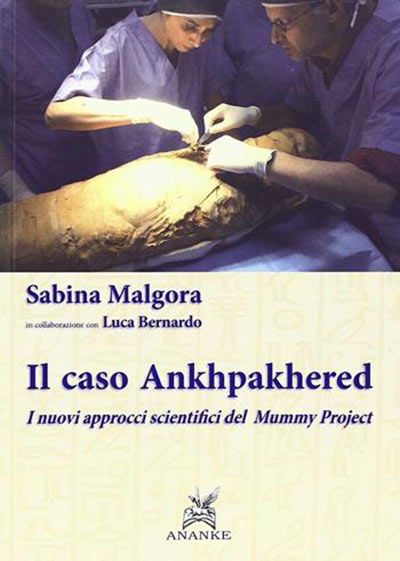
THE ANKHPAKHERED CASE.
The New Scientific Approaches of the Mummy Project


A mummy, its sarcophagus, and an Egyptologist — the mystery of Ankhpakhered has all the ingredients to captivate readers. According to the hieroglyphs, the sarcophagus—dated between 740 and 725 BCE—once contained the remains of a priest named Ankhpakhered, who lived between the 22nd and 23rd Dynasties.However, the mummy found inside is wrapped in a very simple bandage, without any name inscription, external shroud, or the amuletic equipment one would expect for a member of the priestly class. In addition, the body presents many post-mortem fractures, and the bones are displaced, suggesting that the mummy in the sarcophagus may not, in fact, be Ankhpakhered himself. After a conservation-oriented restoration, the mummy underwent a CT scan at the Fatebenefratelli Hospital in Milan to determine its date and obtain axial images that enabled a 3D reconstruction, revealing aspects of its medical history. For now, however, the mummy continues to guard its mystery closely.

These volumes support the Mummy Project. To request a copy, please write to info@mummyproject.it

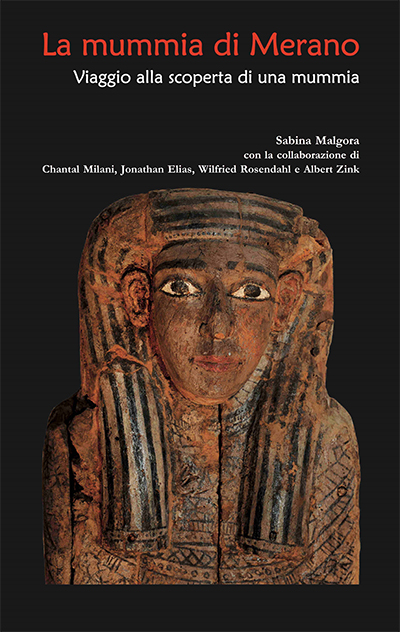
THE MUMMY OF MERANO
Journey into the Discovery of the Mummy


This volume recounts the research conducted on the Egyptian mummy and its sarcophagus preserved at the Palais Mamming Museum in Merano, carried out by the Mummy Project team led by Sabina Malgora. The Mummy Project is a center for research, project development, and cultural events dedicated to the study of mummies and Egyptian collections using state-of-the-art forensic techniques.The modern story of this mummy begins with the observations of the researcher. The mummy is mysterious: it rests in a sarcophagus that appears unfinished and larger than the body itself. The mummy and its “magical container” thus became the focus of a project aimed at restoring her identity, discovering her age, and defining the period in which she lived.To this end, the mummy underwent CT scanning and molecular analyses, including radiocarbon (C14) dating, followed by a facial reconstruction. It is a journey of discovery into the life of a woman who lived thousands of years ago. The book presents the investigations, findings, and discoveries with rich photographic documentation and 3D reconstructions.Edited by Sabina Malgora, the volume was co-authored by several members of the research team: Chantal Milani (anthropologist), Jonathan Elias (Egyptologist), Wilfried Rosendahl (molecular analysis specialist), and Albert Zink (DNA specialist).

Questo volume sostiene il Mummy Project. Per l'acquisto scrivere a info@mummyproject.it

LET’S PLAY WITH THE SPHINX

This book was created for Mattia, my nephew, who inspired it. Before becoming a book, many of its themes appeared as a column in the weekly newspaper La Vita Casalese. The idea was born from a conversation with the editorial team—especially my journalist friend Marcella Bertozzi.It was written during the darkest days of the COVID-19 pandemic and came to light on the night of the summer solstice, when darkness is most thoroughly overcome. Its structure is deliberately unlike that of a typical children’s book full of colorful drawings. Instead, it resembles an introduction to Egyptology for enthusiasts, presenting complex topics in a simple, accessible way while remaining faithful to scientific truth.This book is not only for my nephew but for all the children who have followed me over the years, bringing me joy and fulfillment. It is also for curious adults who enjoy hands-on activities. It offers a journey in small steps into the wondrous world of Ancient Egypt, where reading alternates with the creation of simple artifacts.

These volumes support the Mummy Project. To request a copy, please write to info@mummyproject.it

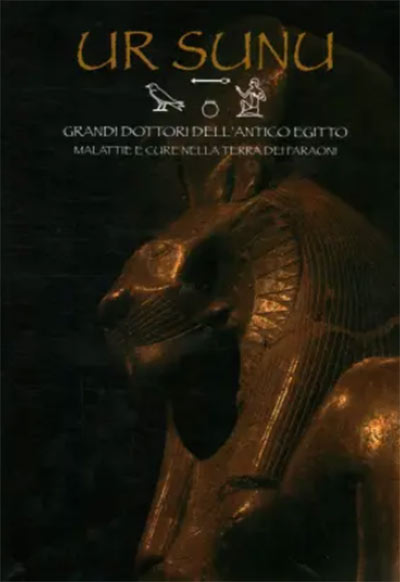
UR SUNU. Great Doctors of Ancient Egypt
Diseases and Cures in the Land of the Pharaohs


There are many windows through which to explore Egyptian culture, and medicine is certainly one of the most illuminating. Documentation spans multiple disciplines — from philology to architecture, painting, papyrology, anthropology, and pharmacology.This volume, originally conceived as the catalogue for an exhibition of the same name, has become a comprehensive and engaging reference text on the subject. Through essays by numerous specialists, it explores a wide range of topics:the figure of the physician, his hierarchy and specializations, the practice of medicine, including diseases and treatments, pharmacopoeia, magical and religious aspects, protective deities, and mummification —all framed within a concise overview of Egyptian civilization. Among its most striking sections are those dedicated to anatomical tables and the medical dictionary. Over 150 artifacts—statues, surgical tools, amulets, papyrus fragments, stelae, and organic remains such as mummies and bones showing trauma, tumors, and dental caries—illustrate the content.The Egyptians emerge as extraordinary physicians, pioneers of advanced medical practices that made them renowned throughout the ancient world. The earliest known doctor in history, a dentist, is documented in Egypt during the 3rd Dynasty. Many modern medical practices have their roots in Egyptian medicine, which sought physical causes of illness and relied on ancient manuals considered divinely inspired and sacred.Clinical investigation was based on three key stages: diagnosis, prognosis, and prescription—much as it is today. The frequent expression “to lay hands upon” in medical papyri is perhaps the emblem of the medical profession in ancient Egypt, just as the stethoscope is today.A rich and exhaustive volume, not merely a catalogue, but a true handbook of ancient Egyptian medicine.

These volumes support the Mummy Project. To request a copy, please write to info@mummyproject.it

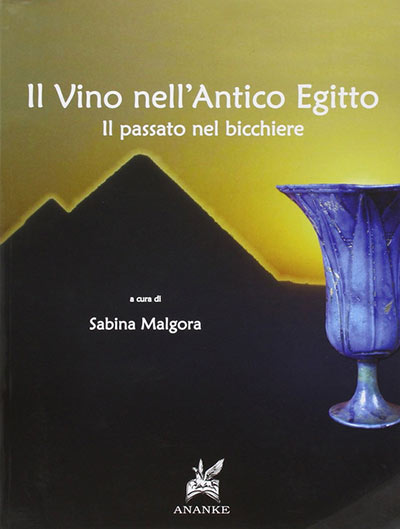
WINE IN ANCIENT EGYPT.
The Past in a Glass


Wine is a poetic expression of land and history. In Ancient Egypt, it was a precious commodity, generally reserved for the royal family and elite classes, and an important element in funerary offerings. It was also used in rituals, endowed with divine qualities.Its production involved many people, from vine cultivation to consumption. There were red, white, and sweet wines, and the volume—enriched with a striking photographic collection of artifacts and tomb paintings—illustrates the timing and methods of viticulture, surprisingly similar to those of today.There were crus, vintners’ names, amphora labels, vintages, and soil classifications. Particularly prized in the Greco-Roman Period was the Meroitic white sweet wine, beloved of Cleopatra.The book explores the religious symbolism of wine, especially its association with Osiris, god of the afterlife and also of wine, and its funerary significance, including discoveries such as the tomb of Tutankhamun, which yielded dozens of wine jars. Wine and the vine came to embody a symbol of resurrection, a meaning that endured through the centuries and deeply influenced Christian belief.Originating from the 2014 exhibition in Alba, the volume—edited by Sabina Malgora—offers a captivating and comprehensive study, with contributions by Maria Cristina Guidotti, Maria Rosa Guash Jané, Dominic Rathbone, Jonathan Elias, Patrick E. McGovern, Marco Mozzone, Mu-Chou Poo, Federico Bottigliengo, Alessia Fasson, Edoardo Guzzon, and Gilberto Modonesi.

In reprint